






Boardwalks in 2026 are not the low-tech hangout spots they used to be. People are streaming live sports, placing mobile bets in real time, and pulling up casino-style platforms, all while standing in direct sunlight with sand underfoot and ocean wind in their face. The environment actively works against your devices, your connection, and your ability to see the screen clearly. Anyone who has tried to catch a live game or check odds from a boardwalk bench knows how fast signal drops and screens wash out.
The good news is that the problems are predictable, which means the fixes are too. Heat management, bandwidth congestion, and data security are the three main categories where setups fail outdoors. But before relying on any gaming platform while you’re out, it helps to compare its mobile experience, payment options, and user feedback. Sweepstakes gaming platforms have become increasingly visible online and popular with residents of Virginia.
It gives players another way to access casino-style games without using the same model as conventional real-money casinos. With more platforms entering the space, however, people who are unfamiliar with sweepstakes gaming may not know what separates one site from another or which factors are worth checking. Resources covering sweepstakes gaming ratings can provide additional context when assessing different platforms before playing on a phone.
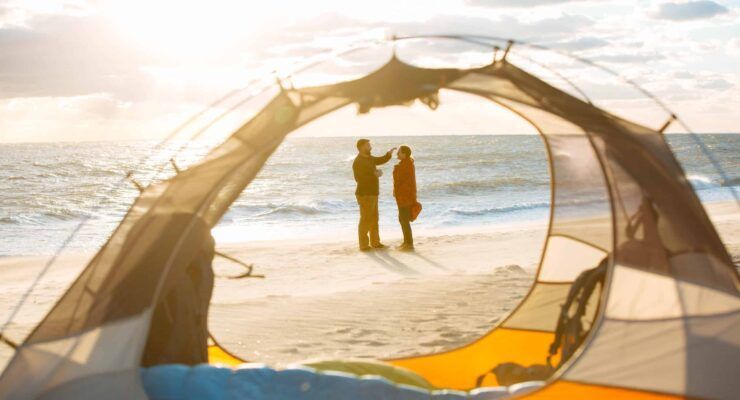
Hack 1: Beat the Heat and Screen Glare Before They Beat Your Device
Direct sunlight makes screens unreadable and triggers thermal throttling, which slows your device to a crawl. This is not a minor inconvenience. When your phone overheats, it intentionally reduces processor speed to protect internal components. In practice, that means delayed loading, choppy streams, and lag on live odds updates at the worst possible moments. Oceanfront environments make this worse because reflective surfaces like water and white sand amplify UV exposure from multiple angles.
The first fix is hardware-level. Replace any glossy screen protector with an anti-reflective matte film. Matte films scatter incoming light rather than bouncing it straight back at your eyes, which dramatically improves outdoor readability without needing to crank brightness, a change that itself drains battery faster. The difference in direct sunlight is immediate and significant.
For active cooling, cooling fans are now compact enough to clip to the back of a phone during extended streaming sessions. These small devices actively lower surface temperature by pulling heat away from the chassis. Running live HD sports streams or a casino-style platform for an extended period without cooling assistance is a reliable way to hit thermal limits within 30 to 45 minutes on most mid-range and even flagship devices in peak summer conditions.
Hack 2: Crush Bandwidth Congestion on Crowded Boardwalk Networks
Boardwalks are notorious for what network engineers call “fake bars”; your phone shows full signal strength while delivering almost zero usable data. This happens because the nearest cell tower is simultaneously serving thousands of other devices from tourists, vendors, and locals packed into a small geographic area. Signal strength and available bandwidth are two completely different measurements, and most people only watch the signal bars.
One of the most effective fixes available in 2026 is forcing 5G Standalone (SA) mode in your cellular network settings. Unlike 5G NSA, which still routes through older 4G LTE infrastructure, 5G SA operates on a completely independent network path. In congested areas where LTE is saturated, SA mode can bypass the traffic bottleneck entirely. Not every carrier supports it in every area, but boardwalk zones in major coastal cities are increasingly within SA coverage.
A second approach that pairs well with SA mode is eSIM data switching. It lets you download prepaid data plans from alternative carriers directly to your phone’s eSIM slot. If your primary carrier stalls during a live stream or mid-session on a gaming platform, switching your active data line to a secondary network takes two taps. Having a backup carrier active removes dependence on a single congested tower and gives you a reliable fallback without any physical SIM swap required.
Hack 3: Lock Down Your Security Without Blocking Your Access
Open boardwalk Wi-Fi networks are a genuine security risk for anyone conducting financial transactions. Packet sniffing on public networks is not a theoretical threat; it is a documented, regularly exploited vulnerability. Anyone using a hotspot at a beachside café or public pier access point while logging into a betting account or making a deposit is exposing sensitive data to whoever happens to be running monitoring software nearby.
A dedicated IP VPN is the correct tool here, and the distinction from standard shared VPNs matters. Shared VPN servers use IP addresses that betting platforms have already flagged and blocked because they are widely associated with VPN traffic. A dedicated IP VPN gives you a single, consistent address that is not flagged, maintains an encrypted tunnel for all data, and still allows geo-location verification to function correctly, which mobile sports betting platforms require to confirm you are in a permitted area.
Beyond network security, biometric authentication adds a physical layer of protection specific to the crowded boardwalk environment. Enabling Face ID or fingerprint confirmation for every individual wager or deposit confirmation means that even if your phone is grabbed off a table or out of your hand, no transactions can be completed without your biometric input. This single setting change is one of the lowest-effort, highest-impact security measures available on any modern smartphone.
Hack 4: Build the Right Gear Kit for All-Day Outdoor Sessions
No software fix compensates for a dead battery or water-damaged device. Long outdoor sessions demand hardware support that matches the environment. The Anker PowerBank 24K is a high-capacity portable charger that can keep both a tablet and a phone running through several hours of simultaneous HD streaming. Its capacity is large enough to provide multiple full charges, which matters when you have no access to a wall outlet for the better part of a day.
Carrying gear safely is equally important. The Yeti Camino Carryall is a rugged, sand-proof, and waterproof utility bag built to house tech equipment near water. Standard backpacks and tote bags allow sand ingress and offer no water resistance, both of which can permanently damage electronics. A dedicated waterproof carry solution protects charging cables, backup batteries, earbuds, and your phone itself from spray, splashes, and accidental drops near wet surfaces.
For audio, Soundcore Sport X10 earbuds deliver waterproof Bluetooth performance with rotating ear hooks designed to stay in place during physical movement and in heavy wind conditions. Ocean wind makes standard earbuds unusable at high volume, and keeping audio locked in without needing to hold an earbud in place is a practical necessity for following live commentary or audio cues from a streaming platform during an active boardwalk session.
Hack 5: Optimize Your Physical Setup on the Boardwalk
The physical way you arrange your gear directly affects how well your technology performs. Sand acts as a thermal insulator when devices are placed directly on it; heat has nowhere to dissipate, and temperatures under direct sun can climb fast enough to trigger immediate shutdowns. Always elevate electronics onto a cooler lid, a folded towel, or a chair seat to allow airflow underneath the device chassis.
Positioning is the other half of the physical setup equation. Using your own body as a sunshield, or placing a beach umbrella to cast a shadow across the back of your phone where the processor sits, reduces absorbed heat load significantly. The front screen is the part most people think about blocking from the sun, but thermal throttling originates from the processor, which is always on the back panel. Shadowing the rear of the device while keeping the screen visible is the optimal positioning approach.
Saltwater mist is a slow but consistent problem that most people underestimate. Ocean spray creates a thin, sticky film on every surface it touches, including lenses and screens. Microfiber cloths are compact enough to fit in any bag pocket, and wiping down screens and camera lenses every hour or so prevents visibility degradation and keeps touch sensitivity accurate. A fogged or salt-coated screen is not just harder to read; it interferes with touch response, which becomes a real problem when navigating a live betting interface or a gaming platform in real time.



 Events


