






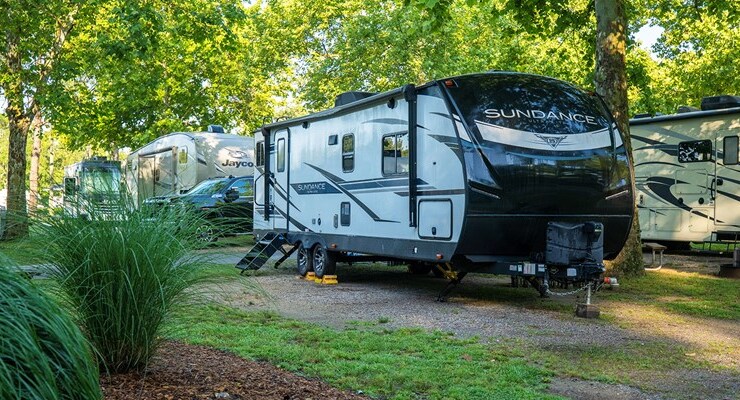
The Virginia coastline doesn’t get the same RV hype as the Outer Banks or Maine, and that’s honestly part of the appeal. From the wide beaches and cypress swamps of Virginia Beach north through the quiet fishing towns of the Eastern Shore, this stretch of coast packs in a surprising range of overnight options; state parks with water and electric hookups a few miles from the ocean, waterfront private campgrounds that can take 40-foot rigs, and a barrier island wildlife refuge that people drive from four states away to see.
Planning this kind of trip takes some homework. The state parks book up fast in summer. Some campgrounds have hard length limits. A few of the most scenic spots are dry-only, and the right rig makes a bigger difference than most guides admit.
A Class A diesel pusher and a lightweight travel trailer are not the same trip when you’re navigating a two-lane causeway to an island or backing into a tight waterfront site. Before you start building an itinerary, it helps to sort that out. If you’re still deciding between vehicle types, the best RV comparison tool for families covers 2026 models side by side, which is worth a look before you commit to a site category.
This guide covers seven specific overnight spots along the Virginia coast, with campground names, hookup details, price ranges, and honest notes on what makes each one worth the drive.
1. First Landing State Park: Virginia Beach
First Landing is where the English colonists first touched Virginia soil in 1607, before sailing up the James River to Jamestown. Today the 3,000-acre park sits at the northern tip of Virginia Beach, bordered by the Chesapeake Bay and Broad Bay, and it’s one of the best-positioned campgrounds on the entire coast, close enough to the Virginia Beach Oceanfront that you can hit the beach in 20 minutes, but the campground itself is quiet forest camping among rare bald cypress trees.
- Where to park: The campground has 218 sites total. Electricity and water sites run three lengths: 20-ft (45 sites), 30-ft (27 sites), and 50-ft (36 sites). There are also 75 standard (no hookup) sites. Bathhouses with hot showers are on-site.
- Cost: Roughly $24 to $36 per night for electric/water sites, depending on length and season. Standard sites are cheaper.
- Reservations: Book through the Virginia State Parks system at reserveamerica.com, as summer weekends fill six months out.
- Best season: Mid-April through early June, or September through October. Summer works but the park is packed and heat/humidity are real. The cypress swamp trails are genuinely gorgeous in fall color.
What’s nearby: 19 miles of trails through one of the northernmost stands of bald cypress and Spanish moss in the U.S. The 64th Street public beach access is a short drive. If you love seafood, the restaurants along Shore Drive and on the Oceanfront are 10 to 20 minutes away.
2. Holiday Trav-L-Park: Virginia Beach Resort Area
If First Landing is the nature pick, Holiday Trav-L-Park is the family-resort pick. It’s the closest campground to the Virginia Beach resort strip, which means you can walk or bike to the boardwalk without loading up the tow vehicle every time.
- Where to park: Full hookups (water, electric, sewer) with 30- and 50-amp service. Pull-through sites available for big rigs. Paved RV pads, laundry on-site.
- Cost: Rates vary by season; $55 to $85 per night in peak summer is typical for full-hookup sites.
- Reservations: Book directly at campingvb.com, and do it early for summer. Last-minute availability in July is basically zero.
- Best season: Late May through early September for the full beach experience. Shoulder season (April, October) is quieter and cheaper.
- What’s nearby: The boardwalk, the Virginia Beach Fishing Pier, the Atlantic Wildfowl Heritage Museum, and a solid concentration of restaurants and shops. If you have kids, this location eliminates a lot of car trips.
3. North Landing Beach: Chesapeake / Virginia Beach South
About 20 miles south of the resort area, North Landing Beach is a legitimate destination for big rig campers who want full hookups, decent amenities, and waterfront access without paying resort prices. The property sits on the North Landing River, which connects to the Intracoastal Waterway.
- Where to park: Big-rig-friendly sites with full hookups (water, electric, sewer, cable), 20/30/50-amp service. Sites described as spacious and level.
- Cost: Roughly $50 to $70 per night for full hookup sites.
- Best season: Spring and fall for boaters. Summer is busy but the river access keeps it cooler than landlocked campgrounds.
- What’s nearby: The Great Dismal Swamp National Wildlife Refuge is a 30-minute drive west, worth at least a half-day. Kayaking and fishing directly from the campground. It’s a quieter, more rural vibe than the resort area.
4. Kiptopeke State Park: Cape Charles / Southern Tip of Eastern Shore
Cross the Chesapeake Bay Bridge-Tunnel from Virginia Beach and you’re on the Eastern Shore, one of the most underrated stretches of the mid-Atlantic coast. Kiptopeke State Park anchors the southern tip of the Delmarva Peninsula, on the bay side, with views of the old concrete ships from World War II that were sunk here to create a breakwater. It’s also a world-class hawk and songbird migration site; the hawkwatch platform here counts hundreds of thousands of raptors every fall.
- Where to park: Campground has sites with water and electric hookups (some with sewer). There’s also a primitive tent-only area. RV sites take one wheeled camping unit.
- Cost: $30 to $40 per night for electric/water sites. Reserve through Virginia State Parks (reserveamerica.com).
- Best season: September and October for the raptor migration; this is genuinely one of the best spots in the eastern U.S. for hawk watching. Spring is also strong for migratory songbirds. Summer is pleasant but misses the migration.
- What’s nearby: Cape Charles, a restored Victorian beach town about 5 miles north, has a surprisingly good restaurant scene, a wide sandy bay beach, and a small but walkable downtown. The Eastern Shore of Virginia National Wildlife Refuge is right next door to Kiptopeke.
5. Cape Charles / Chesapeake Bay KOA Resort: Eastern Shore
A mile or two from Cape Charles, the KOA here is a well-regarded private resort-style campground with bay frontage and the full range of KOA amenities, including pool, playgrounds, planned activities, and camping cabins.
- Where to park: Pull-through and back-in sites with full hookups, accommodating rigs of all sizes. Water and electric minimum on all RV sites, sewer on premium spots.
- Cost: Typically $60 to $90 per night for full hookup sites; waterfront premium sites run higher.
- Reservations:com/campgrounds/chesapeake-bay. Book early for summer weekends and holiday weeks.
- Best season: April through October. The bay sunsets from the waterfront sites are genuinely worth the premium.
- What’s nearby: Same Cape Charles access as Kiptopeke, plus a short drive to local seafood spots on the water. The KOA is also a reasonable base for day trips north toward Chincoteague (it’s about 90 minutes).
6. Tom’s Cove Park: Chincoteague Island
Tom’s Cove Park is the classic Chincoteague camping spot. It’s been here for decades, it’s waterfront on the bay side of the island, and it’s a short bike or car ride to the entrance of Chincoteague National Wildlife Refuge, which is where the beach actually is.
- Where to park: Waterfront and non-waterfront sites with full hookups. The park is known for a relaxed pace and traditional campground feel rather than resort-style amenities. Waterfront sites book the fastest.
- Cost: Varies by site type and season; $50 to $80 per night is a reasonable range. Book through tomscovepark.com.
- Reservations: Reserve early for July, as the Pony Swim week is basically sold out six to 12 months in advance.
- Best season: Late spring (May to June) and early fall (September). Peak summer is the Pony Swim crowd plus general beach tourist traffic, as the island gets very busy.
- What’s nearby: Everything Chincoteague. The refuge beach (Assateague Island) has excellent surf fishing, shell collecting, and wildlife watching. You can rent bikes on the island and ride the refuge loop trail. The town has a concentrated cluster of seafood restaurants and the famous Chincoteague ponies wandering around during the festival.
7. Chincoteague Bay RV Resort: Eastern Shore, Just Off Chincoteague
If Tom’s Cove is full (and it often is), Chincoteague Bay RV Resort is the big-rig alternative a few miles from the island causeway. It’s a newer, purpose-built resort with modern amenities including a pool, and it explicitly accommodates large rigs.
- Where to park: Full hookups, spacious gravel or paved pads, 30/50-amp service. Waterfront sites available.
- Cost: $60 to $120 per night, with waterfront sites at the higher end.
- Best season: Late spring through early fall. The resort is positioned to serve Chincoteague visitors, so it follows the island’s seasonal rhythm.
- What’s nearby: Chincoteague Island is a 10-minute drive. The Chincoteague National Wildlife Refuge on Assateague Island protects the wild ponies made famous by Marguerite Henry’s Misty of Chincoteague, the herd is managed by the Chincoteague Volunteer Fire Company, which has held the annual Pony Swim since 1925.
When to Come: Weather by Season
- Spring (March to May): Temperatures move from the 50s in March into the 70s by May. This is some of the best camping weather on the coast; mild, manageable crowds, and migrating birds. Late April to early May is particularly good. Bring rain gear; spring fronts move through regularly.
- Summer (June to August): Hot and humid. Daytime highs in the 85 to 92°F range, humidity that makes it feel hotter. Water is warm, crowds are at their peak, campground rates are highest. Peak hurricane season runs August through October; watch the forecasts.
- Fall (September to October): This is the sweet spot. Temperatures drop back into the 70s, humidity eases up, the water is still warm from summer, and crowds thin out dramatically after Labor Day. Kiptopeke in October for the raptor migration is genuinely special. This is when experienced coastal campers schedule their trips.
- Winter (November to February): Cold (30s to 50s), quiet, and a few campgrounds close partially or fully. First Landing and Kiptopeke stay open year-round. If you don’t mind the cold, you’ll have the beaches mostly to yourself.
Festivals and Events Worth Timing Around
Chincoteague Pony Swim: Late July (2026: July 29–31)
The Assateague wild pony herd is swum across the channel to Chincoteague, where the foals are auctioned. It’s been happening annually since 1925; this year is the 101st swim. The week around it is the biggest event on the island all year. Book accommodations at least six months out if you want to be there.
Neptune Festival: Late September, Virginia Beach
The Neptune Festival produces more than 40 events including a major sandsculpting championship on the beach, an art show, live music, and a seafood festival. It’s the bookend to summer on the resort strip and draws a big crowd without the same heat and congestion. Great timing for campers who want things to do in Virginia Beach with a little more elbow room.
Something in the Water: Spring, Virginia Beach
Pharrell Williams’ music and culture festival brings top-tier performances to the oceanfront. Something in the Water started in 2019 and has grown into one of the bigger music events in the Southeast. Be sure to check current dates, as the schedule shifts year to year.
Quick Planning Notes
The Virginia Beach-Chincoteague run up Route 13 along the Eastern Shore is one of the more underrated road trip corridors on the East Coast. You can camp at Kiptopeke or the Cape Charles KOA, spend a day in Cape Charles, then move up to Chincoteague for two or three nights, all within about 100 miles of driving.
If you’re doing multiple nights on the Eastern Shore, note that large rigs navigate the two-lane causeway to Chincoteague fine, but some of the roads inside town are tighter. Chincoteague Bay RV Resort or Tom’s Cove are the practical choices if you’re in a 40-footer.
For kayaking in Virginia Beach before heading north, the best kayak spots in Virginia Beach include Lynnhaven River and the waters around First Landing, both accessible from the state park campground.
The coast here rewards the campers who do their research. Sites fill up, seasonal windows matter, and the difference between a 20-foot pop-up and a 40-foot Class A is the difference between some sites being available and not. Plan early, book early, and this coast delivers consistently.



 Events


