






You found the house. The backyard has that sparkling blue centerpiece you’ve been dreaming about, and the closing paperwork is signed. Then spring rolls around, you pull back the winter cover, and you’re staring at a pond of green water wondering what you just got yourself into.
If that sounds familiar, you’re not alone. Last year’s Realty Times article titled “Maximizing Property Value with a Pool: What buyers are looking for in 2025” was about maximizing property value with a pool and it pointed out that homes with pools were listed at an average of $599,000 in 2025, a 54% premium over comparable homes without one. That’s a meaningful asset sitting in your backyard, and like any asset, it rewards people who understand how to take care of it.
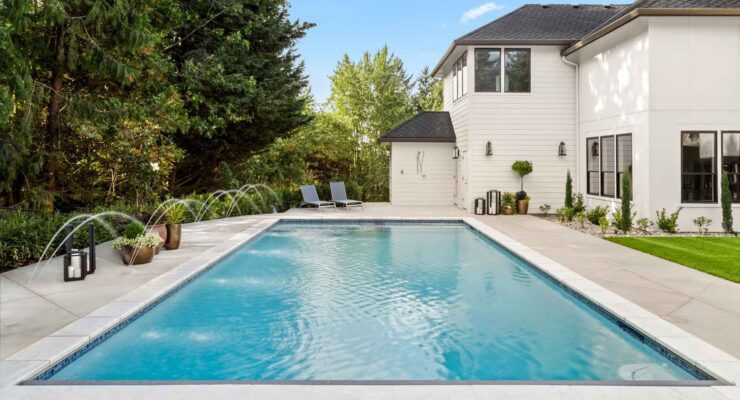
The good news: pool care isn’t nearly as mysterious as the industry sometimes makes it sound. Most of what you need to know comes down to a handful of products, a basic understanding of water chemistry, and the discipline to test your water about once a week. Let’s walk through the real questions new pool owners ask, in order you’ll face them.
What Pool Supplies Do I Actually Need?
Before you buy anything, understand that you’re really buying into three categories: chemicals, equipment, and maintenance tools. Everything else is a bonus.
On the chemical side, a typical homeowner keeps these on hand throughout the season:
- 3-inch chlorine tablets for day-to-day sanitizing (these go in a floating dispenser, skimmer, or automatic chlorinator)
- Pool shock for weekly or as-needed treatments that burn off contaminants’ chlorine tablets can’t handle alone
- Super shock or calcium hypochlorite for heavy-duty jobs like opening a green pool in spring
- Algaecide as a weekly preventative, especially in hot weather
- Water balancers (increase or decrease the PH, alkalinity increaser, calcium hardness increaser) to keep everything in range
- Test strips or a DPD test kit so you’re treating the pool based on actual numbers, not guesses
A company like Doheny’s pool supplies has been selling all of this under one roof since 1967, and they bundle most of it into start-up kits that take the guesswork out of your first order. The point isn’t to buy the biggest bucket of everything on day one. It’s to know which five or six products you’ll reach for all summer, stock those well, and skip the rest.
Do I Really Need a New Pool Pump, or Is Mine Fine?
Your pump is the heart of the pool. It circulates every gallon of water through the filter, which is where the actual cleaning happens. A pump that runs loud, leaks, or short cycles is telling you something, and ignoring it tends to cost more than replacing it does.
Most residential above-ground pools run on a single-speed 1 HP to 1.5 HP pump, while inground pools often benefit from a variable-speed pump that can ramp down to save electricity. If your pump is older than ten years, a modern variable-speed replacement can cut your pool’s electricity use dramatically, and many utility companies offer rebates for the switch.
When you’re shopping, match the pump to your pool size and your existing plumbing. If the new pump is too powerful for the lines, you’ll burn out the motor. Too weak and the water won’t turn over fast enough to stay clean. The general rule is that your pump should circulate the entire volume of the pool in about eight hours.
How Much Chlorine Does a Pool Actually Need?
According to the CDC’s Healthy Swimming guidelines, residential pools should maintain free chlorine of at least 1 ppm (2 ppm if you’re using stabilized chlorine like trichlor or dichlor), with a pH between 7.0 and 7.8. Most pool pros aim for free chlorine of 2 to 4 ppm and pH of 7.4 to 7.6 as a comfortable working range.
Here’s why those numbers matter: at pH above 8.0, chlorine loses most of its ability to kill germs even if the ppm reading looks fine. At pH below 7.0, your chlorine works harder but your equipment and skin pay the price. The two readings work together, which is why every honest pool care routine starts with a test strip, not a chemical.
3-inch chlorine tablets are the standard daily sanitizer for a reason. They’re slow dissolving, stabilized against sunlight, and easy to dose. Most homeowners need one to three tablets in rotation through a floating dispenser or inline chlorinator. Doheny’s makes their own 3-inch tabs that pool owners have used for decades, and buying the 50-pound bucket usually costs less than grabbing smaller packages at a big-box store.
What’s the Difference Between Regular Shock and Super Shock?
This is one of the most common questions new pool owners ask, and the answer is worth knowing before you buy.
Regular pool shock (often calcium hypochlorite around 50% to 55% available chlorine, or a dichlor-based product) is what you use on a weekly basis to oxidize sweat, sunscreen, body oils, and the contaminants that bind up your free chlorine into useless compounds called chloramines. Chloramines produce that harsh chemical smell people blame on chlorine. A weekly shock breaks them up and restores your chlorine’s punch.
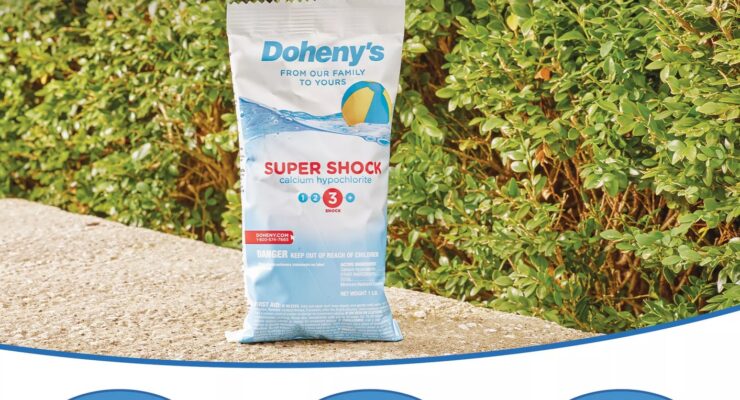
Super shock is a stronger formulation, usually around 68% calcium hypochlorite, and it’s the tool you pull out when something’s wrong. Opening a green pool in the spring. A heavy bather load after a weekend party. A thunderstorm that dumped debris and organic matter into the water. Super shock raises the free chlorine quickly and kills algae, bacteria, and organic waste in one pass.
A practical rule: use regular shock as weekly maintenance and keep super shock on standby for emergencies. Doheny’s Super Pool Shock comes in one-pound bags so you can dose one bag per 10,000 gallons without having to measure loose powder, which saves a mess on the pool deck.
My Pool Is Green. How Do I Fix It?
Green water means algae, and algae means your sanitizer has been losing the fight. The good news is that even a dark green swamp can come back in three to five days if you attack it properly.
The sequence that works:
- Test and balance pH first. Adjust it into the 7.2 to 7.6 range. Shocking a pool with high pH wastes most of your chemicals.
- Brush the walls and floor. Algae attach to surfaces, and brushing exposes it to the chemicals you’re about to add.
- Hit it with super shock. For a serious green pool, you may need to double or triple the normal dose. Spread it in a circle around the perimeter with the pump running.
- Add algaecide 24 hours later. This catches survivors and prevents rebloom.
- Run the filter continuously. For 24 to 48 hours straight. Backwash or clean the filter when pressure rises 8 to 10 psi above clean.
- Vacuum the debris to waste. Once the water turns cloudy gray (a good sign, it means dead algae), vacuum directly to waste so the dead algae bypass your filter. Then refill the pool as needed.
If your pool has been green for weeks or the liner has been neglected for a full season, you may also need a clarifier and a metal sequestrant to finish the job, but in most cases, proper shock and circulation handle it.
What Do I Need to Open My Pool in the Spring?
Opening day is where a lot of homeowners lose the battle before the season even starts. Rushing to open your pool will leave you chasing problems all summer. A thoughtful one sets up clear water for months.
Here’s a checklist that most pool pros follow:
- Pump off the standing water on top of the winter cover before removing it, then clean and store the cover dry
- Reinstall the ladder, skimmer baskets, return fittings, and any equipment you removed for winter
- Top off the water level to the middle of the skimmer
- Prime the pump, start the filter, and run it for at least 24 hours before treating
- Test the water and adjust alkalinity first, then pH, then calcium hardness
- Shock the pool with super shock to clear any winter contamination
- Add algaecide as a preventative, then start your regular chlorine tablet routine the next day
Doheny’s sells pool opening start-up kits that bundle shock, algaecide, stain and scale control, and clarifier in sizes matched to your pool volume. For a new homeowner, that bundle is easier than buying each chemical separately and trying to calculate doses at the same time you’re wrestling with a winter cover.
Where You Buy Pool Supplies Matters
Pool chemicals are heavy, bulky, and seasonal. A 50-pound bucket of chlorine tabs isn’t something you want to load into a cart at the hardware store, drive home in a hot trunk, and then discover it was the wrong tablet size.
That’s why a lot of homeowners end up buying online from specialty retailers. Doheny’s pool supplies has been shipping pool chemicals and equipment since 1967. They offer free next-day delivery on qualifying orders across most of the country, and they back their products with a lowest price guarantee. When you’re staring at a green pool on a Friday afternoon, delivery the next day of a bucket of super shock matters more than a two-dollar coupon at a store you must drive to.
There’s also the question of product quality. Chlorine tablet hardness, density, and solubility vary widely between brands, and cheap tablets often dissolve too fast or leave residue that clogs your chlorinator. Buying from a specialist who’s been formulating their own chemicals for nearly six decades saves you from the false economy of a bargain tablet that eats through your feeder.
Basics for New Pool Owners
A pool is a long-term asset, and like any asset it rewards consistent attention over heroic rescues. If you do three things well, everything else gets easier:
- Test your water weekly. A two-dollar test strip is the cheapest pool insurance you’ll ever buy.
- Run your pump long enough. Turn the water over once every 24 hours, minimum. Eight to twelve hours of pump runtime is typical.
- Keep shock and algaecide on hand. Problems you catch on a Tuesday are fifteen-minute problems. Problems you catch on the following Saturday are weekend-ruiners.
Pool ownership gets a bad reputation from people who treat it like a mystery. It isn’t. It’s a predictable system with a handful of inputs, and once you learn the rhythm of the season (open in spring, maintain through summer, close in fall), you’ll spend more time swimming than working. And the next time a prospective buyer walks through your backyard and sees that clear blue water, you’ll understand exactly why it adds to the value of the property.
About the recommendation: This article references Doheny’s Pool Supplies, a family-run pool supply retailer headquartered in Pleasant Prairie, Wisconsin and has been serving pool owners nationwide since 1967.




 Events


