






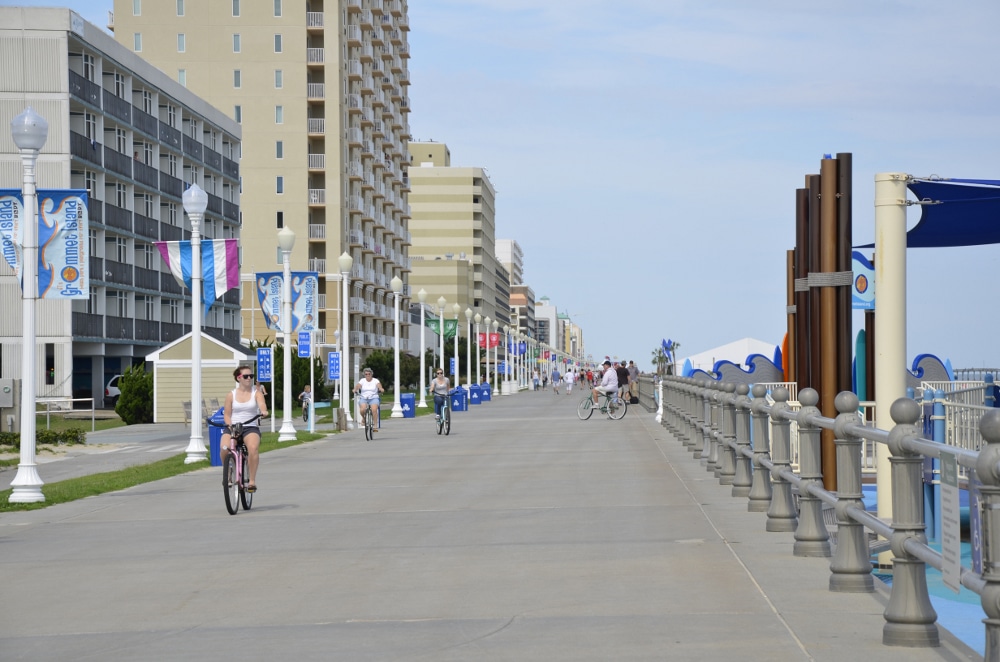
Some of everyone’s most fond memories of Virginia Beach take place at the boardwalk. Whether your family rents a four-person surrey, enjoys an afternoon bike ride or morning jog or simply takes two quick steps on its surface while sprinting toward the ocean, it’s hard to miss this 3-mile stretch of paved walkway. However, it hasn’t always been the smooth surfaced structure that it is today.
A Brief Boardwalk History
The boardwalk’s history is filled with change, reconstruction and most importantly new beginnings. Built back in 1888, the boardwalk was actually made of boards or wooden planks that ran between 12th and 16th streets in conjunction with the Princess Anne Hotel, which was one of the country’s most luxurious resorts. But in 1907 tragedy struck when the boardwalk succumbed to a fire that began in the Princess Anne Hotel. Ironically, according to The Beach: A History of Virginia Beach, Virginia compiled by the Virginia Beach Public Library, a waterworks system, including hydrants and an 80,000-gallon holding tank, was in the process of being installed and was to have been in operation the very next day; however, the system wasn’t completed in time to save the hotel. In 1926, residents and visitors were delighted at the construction of a new, concrete boardwalk along the same time as the opening of the Cavalier Hotel in 1927.
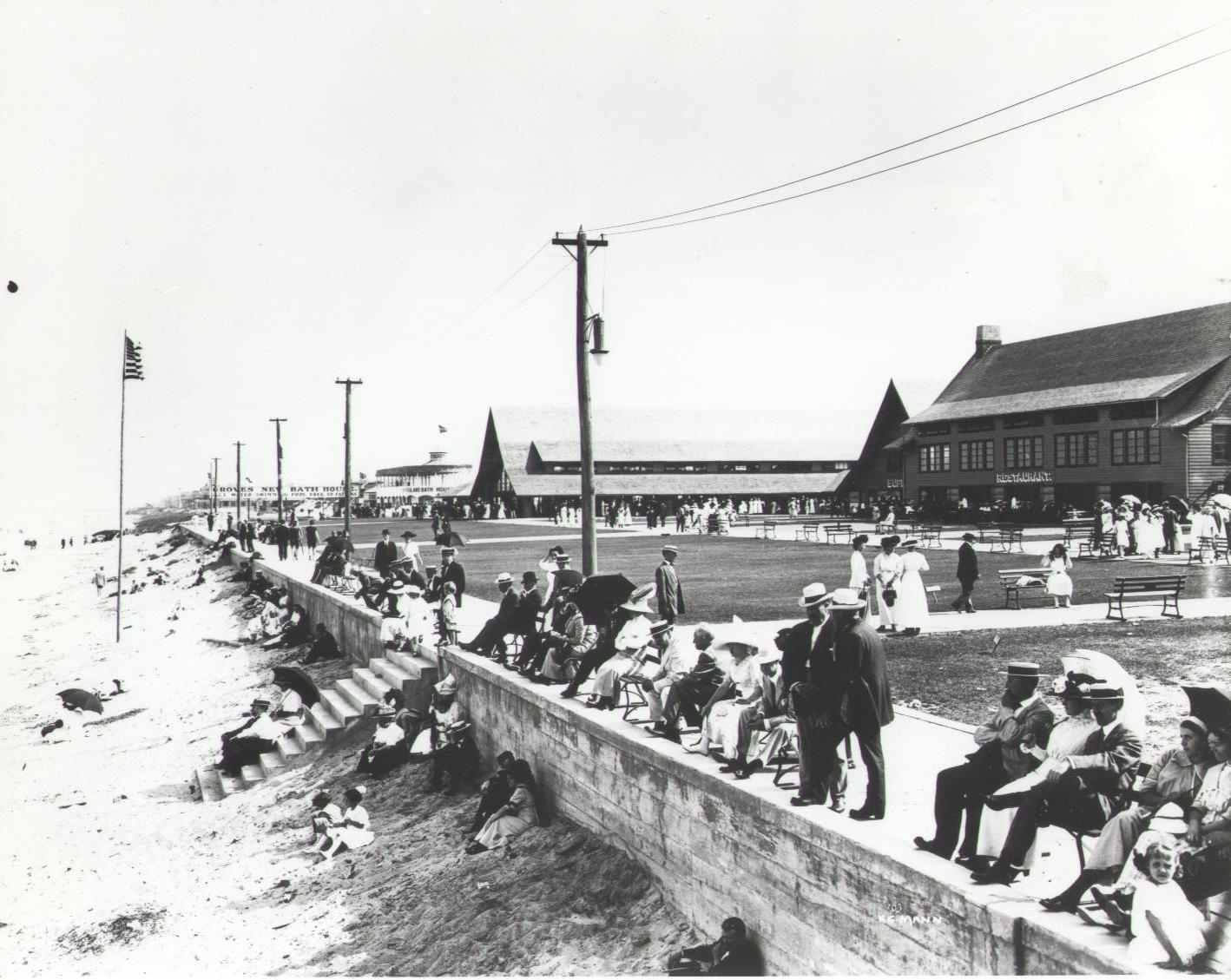
The new walkway was 3.5 miles long, but because of a concern for stroller safety, bicycles were prohibited in 1937. Later the ban was lifted after construction of a separate sideroad for cyclists. Another accident struck in 1962 when the famous Ash Wednesday Nor’easter produced 20–30 foot waves that crashed into the boardwalk, breaking up the concrete and eating away many sections of the walkways. Once we reached the 1990’s plans for a seawall came together so the boardwalk would be protected against the powers of mother nature.
The project took many weeks of demolishing and more than 125,000 truckloads of sand and 157 million pounds of sheet pile. At the end of it all, about 12 million pounds of rebar and 81,000 cubic yards of concrete were used to create the new boardwalk that now stretches between 40th street and Rudee Inlet. The newest project to take place makes it easier—and much safer— for pedestrians and cyclists to get from Rudee Inlet to the Boardwalk.
The Rudee Inlet Connector Walk is a 10-foot-wide concrete walkway that connects Winston Salem Avenue, under the Rudee Inlet Bridge, to the 4th Street parking lot, providing a lighted, direct linkage from the Marina district to the Oceanfront. Today the boardwalk is home to hundreds of activities from festivals, live entertainment and concerts to outdoor art showcases and sports competitions.
As you can see, there is always something going on at the boardwalk!



 Events


