






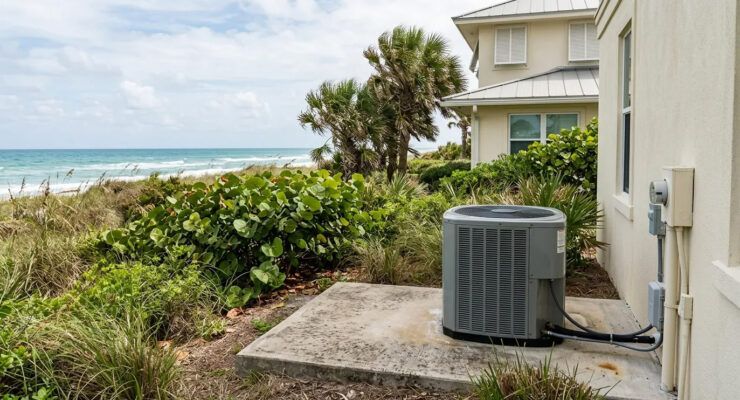
Living near the ocean comes with plenty of rewards, but your air conditioner probably does not share the enthusiasm. Salt spray, blowing sand and long, humid summers put coastal cooling systems under more stress than the same equipment sees fifty miles inland.
The good news is that most of that wear is predictable, and a lot of it is preventable.
What the coast does to an AC unit
Salt is the main enemy. Carried on the breeze, it settles on the outdoor coil and slowly corrodes the thin aluminum fins and copper tubing. Corroded fins transfer heat poorly, so the system runs longer for the same cooling. Eventually corrosion can open pinhole leaks in the coil and the refrigerant escapes.
Humidity adds its own load. On a sticky afternoon, the system has to remove moisture as well as heat, which means long run times and lots of condensate. A clogged drain line in that climate turns into a water leak quickly.
Signs it is time to call for help
Coastal homeowners tend to need air conditioning repair services for the same handful of problems. Watch for these signs.
- The system runs constantly but the house never reaches the set temperature.
- Ice forms on the refrigerant line or indoor coil.
- Water collects around the indoor unit or drips from the ceiling below it.
- The outdoor unit hums but the fan does not spin.
- Rooms feel cool but clammy, a sign the system is not removing humidity.
Ignoring these signs rarely saves money. A small refrigerant leak or a failing fan motor makes the compressor work harder, and the compressor is the most expensive part of the system to replace.
How to slow the wear
Rinse the outdoor coil gently with a garden hose a few times a season to wash away salt and sand, spraying from the inside out if the unit allows. Never use a pressure washer, which flattens fins. Keep shrubs trimmed back for airflow. Have the condensate line flushed during annual service. When replacement time comes, ask about coils with protective coatings designed for coastal environments.
Repair or replace near the water
Because corrosion is gradual, coastal owners often face the repair-or-replace question earlier than inland neighbors. A system with a leaking, heavily corroded outdoor coil may be due for replacement even if the compressor still runs well. Ask the technician to show you the coil condition, and weigh the repair estimate against the age of the unit and how many summers it realistically has left.
Hurricane season prep
Before a storm, turn the system off at the thermostat and the disconnect if flooding or power surges are likely. After the storm, check the outdoor unit for debris and standing water before switching it back on, and call a technician if it was submerged.
Choosing who does the work
Ask whether the contractor’s technicians are NATE-certified and what warranty covers the repair. Synergy3, a family-run HVAC company that has served the Mid-Atlantic coast region from Greater Philadelphia and South Jersey since 2006, offers a one-year warranty on labor and parts, a useful benchmark when comparing local quotes.
The ocean will always win eventually, but regular rinsing, annual service and quick repairs can add years to a coastal system. As Synergy3 technicians often put it, the units that last near the water are the ones somebody looks at every spring.




 Events


