






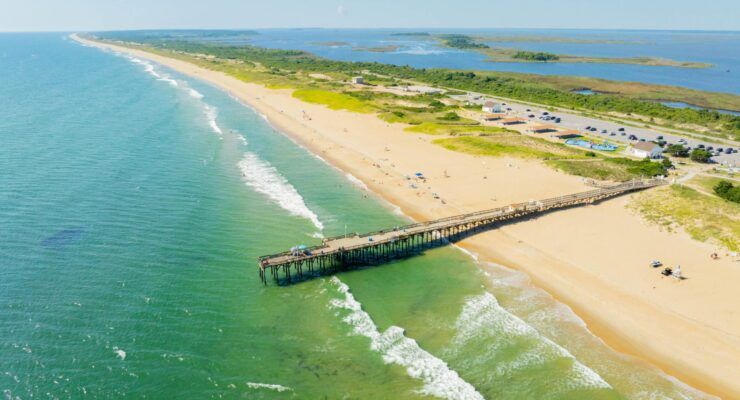
Virginia Beach is famous for its beaches, boardwalk, water activities, and coastal scenery, but there is another side of the destination that visitors may not immediately notice: the science behind its marine environment.
The city sits where several distinct coastal habitats and waterways come together. Visitors can experience the Atlantic Ocean at the Oceanfront, explore the Chesapeake Bay at First Landing State Park, and discover wetlands, forests, and wildlife farther south around Sandbridge and Back Bay. These environments make southeastern Virginia an interesting destination for travelers who enjoy combining outdoor recreation with learning about nature.
For visitors interested in the science behind coastal ecosystems, modern analytical technologies such as molecular spectroscopy provide an interesting window into how scientists study materials and chemical characteristics. While most vacationers come to Virginia Beach to relax, swim, hike, paddle, or explore, understanding the science behind the environment can make those experiences even more meaningful.
Virginia Beach Is More Than an Oceanfront Destination
The Oceanfront is the heart of the city’s traditional beach vacation experience. The three-mile Boardwalk provides access to the Atlantic shoreline, restaurants, entertainment, and a variety of activities. Visitors can also explore Rudee Inlet, where fishing, boating, and other water-based experiences are available.
But the geography of Virginia Beach extends well beyond the main resort area.
First Landing State Park, for example, covers 2,888 acres and includes approximately 20 miles of trails, 1.5 miles of Chesapeake Bay beach frontage, maritime forest, lagoons, tidal environments, and cypress swamps.
For tourists, this means one vacation destination can offer very different coastal experiences. A morning on the Atlantic beach can be followed by an afternoon exploring a forest trail or walking beside Chesapeake Bay.
Why Coastal Science Matters to Visitors
A day at the beach may seem simple: sand, water, sunshine, and waves. However, coastal environments are complex systems containing countless interactions between water, minerals, plants, animals, microorganisms, and human activity.
Scientists use analytical techniques to study the chemical and physical characteristics of materials found in these environments. Understanding those characteristics can contribute to research involving water, sediment, plants, marine organisms, and other environmental samples.
One category of analytical technology is spectroscopy. Spectroscopic techniques examine how matter interacts with electromagnetic radiation. Depending on the particular method, researchers can obtain information about molecular composition, chemical structure, and other properties.
For visitors, this science provides another perspective on the landscapes they are exploring. The clear water, marshes, beaches, and forests encountered around Virginia Beach are not isolated features; they are parts of interconnected coastal ecosystems.
Exploring Chesapeake Bay at First Landing State Park
First Landing State Park is one of the best places in Virginia Beach for visitors who want to experience this connection between recreation, history, and nature.
The park has 1.5 miles of sandy Chesapeake Bay shoreline and a network of trails through different habitats. Hiking, biking, fishing, boating, and other outdoor activities give visitors opportunities to experience the area from different perspectives.
The park also provides educational opportunities. Its Bay Lab allows visitors to learn more about the Chesapeake Bay and its wildlife, making the destination particularly appealing to families and travelers who want more than a traditional beach day.
As you walk through the park, it is worth paying attention to the differences between the various environments. A maritime forest, wetland, beach, and open-water area each support different forms of life and have different physical and chemical characteristics.
That variety is part of what makes coastal Virginia such an interesting place to explore.
The Role of Analytical Science
Environmental scientists need reliable ways to investigate materials and samples. Depending on the research question, they may examine water, soil, sediment, plants, biological materials, or chemical compounds.
Spectroscopy can be one component of this analytical toolkit.
Molecular spectroscopy is particularly concerned with obtaining information related to molecules and their interactions with electromagnetic radiation. Different spectroscopic techniques operate in different regions of the electromagnetic spectrum and provide different kinds of information.
For example, researchers may use spectroscopic approaches to investigate chemical composition or identify changes in a material. The appropriate technique depends on the sample and the information researchers need.
For visitors, this may sound highly technical, but the basic idea is easy to appreciate: scientists need specialized tools to understand environments that people enjoy recreationally.
The same coastal landscape that provides a beautiful backdrop for a vacation can also be an important subject for scientific observation and research.
Water Quality and the Virginia Beach Experience
Water quality is naturally important to a coastal destination. Virginia Beach visitors spend time around the Atlantic Ocean and Chesapeake Bay, while residents and businesses also depend on reliable drinking-water infrastructure.
It is important to distinguish between recreational coastal waters and the city’s drinking-water system. The City of Virginia Beach reports that its drinking water meets state and federal health and safety standards. The city’s water system is continually monitored and tested, with treatment processes designed to remove particles, bacteria, algae, and other impurities.
This broader approach to water management demonstrates why analytical testing matters. Water is not simply something people see while visiting the beach. It is a resource that requires monitoring, treatment, research, and responsible management.
Visitors who learn about these processes can gain a deeper appreciation for the infrastructure and environmental science supporting a coastal community.
A Different Way to Experience the Beach
Tourism does not have to be limited to sightseeing. Learning about the environment can turn an ordinary walk along the shoreline into an educational experience.
Look closely at the landscape during your next beach visit. Notice how the sand changes near the water. Watch birds moving between coastal habitats. Look for differences in vegetation between exposed shoreline and protected areas. At First Landing State Park, explore the trails and observe how the environment changes as you move through maritime forest, wetlands, and shoreline areas.
Families can make this especially engaging for children by turning a walk into a simple nature investigation. Encourage young travelers to identify shells, observe birds from a respectful distance, notice different plants, or record what they see along the trail.
First Landing State Park’s educational programs and visitor resources provide additional opportunities to learn about the Chesapeake Bay and its ecosystems.
Combining Outdoor Recreation With Education
One of the advantages of Virginia Beach is that educational experiences can easily be combined with traditional vacation activities.
A family could spend part of a day enjoying the Oceanfront before visiting an attraction or exploring a natural area. Another itinerary might combine hiking at First Landing State Park with time on its Chesapeake Bay beach.
Visitors interested in kayaking, fishing, or wildlife can also use these activities as opportunities to learn more about local ecosystems.
The official Virginia Beach visitor resources highlight outdoor activities including kayaking, paddleboarding, and biking, along with attractions, restaurants, and other vacation experiences.
This combination makes the city attractive to different types of travelers. You can enjoy a relaxing beach holiday while still finding opportunities to explore nature and science.
Planning a Nature-Focused Virginia Beach Vacation
If environmental exploration is part of your trip, give yourself enough time to visit areas beyond the main Oceanfront.
First Landing State Park is an obvious choice for travelers interested in trails, wildlife, history, and Chesapeake Bay scenery. The park is open for day use from 7 a.m. to dusk, according to the Virginia Department of Conservation and Recreation.
Visitors should also plan appropriately for outdoor conditions. Wear comfortable shoes for trails, bring water, use sun protection, and follow posted rules around wildlife and waterways.
The city operates visitor information centers where travelers can obtain local information and assistance with planning their stays. One is located at 2100 Parks Avenue, while another is at First Landing State Park’s Chesapeake Bay Center.
Checking current conditions and operating information before visiting a specific attraction is always a sensible part of vacation planning.
Seeing Virginia Beach Through a Scientific Lens
A Virginia Beach vacation can be as relaxing or adventurous as you want it to be, but it can also be educational.
The city’s beaches, forests, wetlands, waterways, and marine environments provide countless opportunities to observe nature. Behind those visible landscapes is a complex world of chemistry, biology, geology, and environmental science.
Modern analytical technologies, including spectroscopy, help scientists investigate materials at a level that cannot be observed simply by looking at a shoreline or swimming in the ocean. Learning about these technologies can give visitors a greater appreciation for the scientific work involved in understanding and protecting natural environments.
You don’t need to be a scientist to enjoy this perspective. A walk through First Landing State Park, a visit to the Chesapeake Bay shoreline, or an afternoon watching wildlife can inspire curiosity about how these ecosystems function.
Final Thoughts
Virginia Beach offers much more than a traditional seaside getaway. Its combination of Atlantic beaches, Chesapeake Bay shoreline, forests, wetlands, wildlife habitats, recreational opportunities, and educational attractions gives visitors many ways to explore the region.
For travelers who enjoy science and nature, the coastal environment offers an especially interesting perspective. Technologies such as molecular spectroscopy demonstrate how scientists can investigate the chemical characteristics of materials and deepen our understanding of the environments surrounding us.
So on your next Virginia Beach vacation, take time to look beyond the obvious attractions. Enjoy the Boardwalk and the beach, but also explore the trails, waterways, wildlife, and educational experiences that reveal another side of southeastern Virginia.
A deeper understanding of the coast can make a great vacation even more memorable.



 Events


