






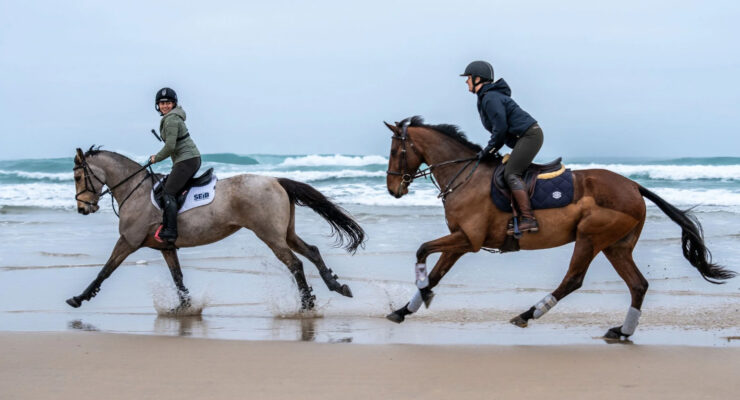
When you picture Virginia Beach, horseback riding probably appears further down on the list of things that come to mind, definitely below surfing, seafood, and beaches.
That’s understandable. Clearly the oceanfront dominates Virginia Beach’s image. But if you drive south away from the hotels and boardwalk, you’ll notice the landscape change surprisingly quickly. You can see barns and horse trails suddenly appear alongside the road, which proves that horses exist here.
In fact, horses have been part of that landscape for generations. Even Virginia Beach has an organized hunt dating to the 1920s, a horse-show association founded in the 1970s, and a mounted police unit operating since the 1980s.
So, Virginia Beach, as it turns out, has two different personalities. One appears in flip-flops, and the other one is in riding boots.
Let’s learn more about Virginia Beach’s rich equestrian heritage.
Horse Country Is South of the Boardwalk
Just so we can better understand the equestrian side of Virginia Beach, we have to remember that much of the modern city was once Princess Anne County. The county dates to 1691 and merged with Virginia Beach in 1963, creating the large independent city that exists today.
Over the years, development eventually transformed the northern and coastal sections, while large parts of southern Virginia Beach remained agricultural. Then came the “Green Line,” which was established in 1986 as a southern boundary that should limit suburban development and protect the rural area.
That explains why the landscape changes when you go south. As you move away from the city, you start to notice farms, nurseries, and plenty of equestrian properties.
One of the best-known rural communities is Pungo, but horse farms are scattered all over the southern portion of Virginia Beach. It’s not like Virginia Beach is Kentucky in terms of equestrian popularity, but horses are still part of the culture and have always been.
Sadly, the equestrian culture here stops at horseback riding and horse barns. There are no live horse racing tracks located in Virginia Beach, which means that if you want to watch a race live, you need to travel to nearby tracks.
But despite the lack of horse racing tracks, horse racing betting is legal in Virginia Beach, and it is regulated by the Virginia Racing Commission. So, you can place a bet online, but before you do that, make sure to learn more about the horse racing bet types. Read more here.
Virginia’s Most Famous Horses Live on the Eastern Shore
Virginia Beach’s equestrian story does not end at the city limits. Follow Virginia’s coast north, and eventually you reach one of the most famous horse landscapes in America: Assateague Island.
The animals popularly known as the Chincoteague Ponies actually live on the Virginia portion of Assateague, inside Chincoteague National Wildlife Refuge.
They are small, stocky horses adapted to a difficult barrier-island environment of salt marsh, wind, heat, and limited forage. The U.S. Fish and Wildlife Service describes them as descendants of domestic horses that have lived in the area for centuries.
Princess Anne Hunt Goes Back to 1927
One of the clearest signs that this tradition is not new is the Princess Anne Hunt.
The organization was established in Virginia Beach in 1927. Its bylaws were adopted on September 4 of that year, and the first opening meet took place only six days later. It registered with the Masters of Foxhounds Association in 1931 and received formal recognition in 1937.
Modern foxhunting in the United States is as much about horsemanship, hounds, countryside, and tradition as the old image of riders charging after a fox. Depending on local practice and laws, hunts may follow scent trails rather than pursue live quarry.
Local Horse Shows Have a Long Tradition Too
The Virginia Beach Horse Show Association, or VBHSA, was founded in 1973 and remains active more than five decades later. It is a nonprofit volunteer organization bringing together local farms, professional riders, adult amateurs, juniors, and other horse enthusiasts, with much of its competition focused on hunters and equitation.
The 2026 schedule gives a good picture of how local the scene remains. Shows rotate through facilities including Crafty Fox Farm, West Neck Creek Equestrian Center, Ellis Equestrian Services, Roseoldian Farm, and Bridlewood Farm, with competitions scheduled from spring into October.
That makes a VBHSA show one of the better ways for a visitor to see Virginia Beach horse culture without turning the experience into a formal riding holiday.
Ride an Actual Horse Along the Atlantic
The good news is that there are plenty of horseback riding tours here that will offer you a different kind of view of Virginia Beach. This is for those that want a totally different experience and don’t want to lie down on the beach all day.
Virginia Beach Horseback operates guided rides directly on the Oceanfront. Riders travel along the beach, beneath the Virginia Beach Pier and through the edge of the surf. The tourism authority lists the experience as suitable for first-time and experienced riders, with oceanfront rides available seasonally from September through May rather than during the crowded main summer beach season.
The cooler months are actually part of the appeal. The beach becomes quieter, the heat disappears, and there is considerably more room for horses than there would be among thousands of sunbathers.
Final Thoughts
So, Virginia Beach will probably never replace the Atlantic Ocean with a horse on its tourism logo. Yes, horses have been part of the culture, but never the main attraction.
Today, visitors can still go on horseback riding tours and experience the beautiful nature, introduce children to ponies, and experience the exciting Hunt Club Farm. And if you happen to visit Virginia Beach anytime soon, make sure you opt for a different kind of experience. One that involves a horse. You’ll have so much fun.



 Events


