






Every last Friday in September, Virginia Beach hands its boardwalk over to a sea god. The 2026 edition runs from the 25th to the 27th, marks the festival’s 52nd year, and costs almost nothing to walk into. Here is what happens across those three days, and where the money actually goes.
Three Days on Thirty-Five Blocks
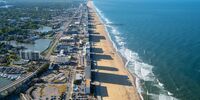
The festival takes over the boardwalk from 1st Street to 35th Street. Live music runs on the festival stages through the weekend, more than 20 sets from local and national acts. The sandsculpting tent draws the biggest lines, the grand parade draws the biggest single crowd, and the rest fills in around them: an 8k race, a surfing classic, a volleyball tournament, a regatta, dog diving, a free children’s zone. Organizers describe attendance in the hundreds of thousands, and one event listing puts it near 400,000, though headcounts at free outdoor events tend to run generous.
Nearly all of it happens live, and that is most of the appeal. Bands play, sculptors carve in front of an audience, the parade passes once and never repeats. Boardwalk music finishes earlier than most first-timers expect, though, so the evening falls to whatever the room offers. A fair number of visitors put on a streamed game or spend an hour at VBet Live Casino, where a dealer works the table on camera instead of software dealing out of sight. Late nights here stay quieter than the days.
Neptune’s Land of Sand
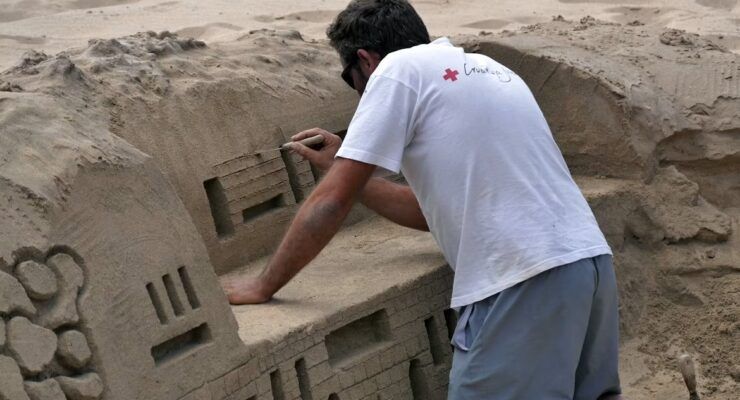
The sandsculpting championship has anchored this festival since 1974, and the scale is genuinely absurd. Crews truck in more than 450 tons of sand, which works out to something like twenty loaded dump trucks, then divide it into 22 piles inside a tent nearly the size of a football field. Thirty-two sculptors from 15 countries get roughly three days of carving. Solo competitors handle around 15 tons each, two-person teams about 22.
Beach sand does not go into the tent, and the reason is technical rather than fussy. Imported sand carries a small share of clay and a finer grain, so it compacts far better under pressure. A few things to have straight before going in:
- The tent sits on the beach between 6th and 8th Streets, with the entrance at 7th.
- Sculptures stay on display well past the weekend, through October 4.
- Master sculptors teach free clinics on the beach at 6th Street. Sand and tools provided, no reservations, so turn up before the class starts.
- Crews spray the finished pieces with biodegradable glue diluted ten to one in water, which keeps a windy afternoon from undoing three days of work.
- Strollers and wheelchairs go in. Dogs do not.
What It Costs
Free events carry the weekend, and that catches out people who expect a festival this size to charge at every turn. Concerts, the parade, the craft show with its 200 or so artisans, the children’s zone, beach yoga: all open, no ticket. Money changes hands in four places.
- Sandsculpting tent admission, seven dollars per person, free for children 12 and under with an adult.
- Entry fees for anyone competing in the 8k, the surfing classic or the volleyball tournament.
- Parking, which climbs steeply the closer you get to the boardwalk.
- Lodging, the real cost of the weekend by a wide margin.
Reports put the sculptors’ prize purse at roughly 58,000 dollars, described as the largest in the country for the discipline. Treat that as an approximation, since the number moves between sources and years.
Where to Stay
Book early, and book on location rather than on price. Oceanfront hotels within walking distance of the stages command the weekend and fill first, which is exactly what the walking distance buys: no parking problem, no evening drive back. Blocks inland cost less and still work, provided the group is willing to walk fifteen or twenty minutes each way.
Larger groups do better in a beach house than in three hotel rooms. Rentals in Sandbridge and along the north end sleep eight to a dozen easily, come with a kitchen, and turn the trip into a base rather than a series of restaurant bills. The trade is distance. Sandbridge sits well south of the festival footprint, so plan on driving in once and staying in.
Getting Around
Come early on Saturday. Traffic on Atlantic and Pacific Avenue thickens by mid-morning, and the blocks closest to the stages fill first. Use a parking garage instead of circling for a street space, then walk everywhere. The boardwalk runs three miles end to end, so treat it as a walking day and dress for wind off the water, which September supplies reliably.
Pick a meeting point before splitting up, because phones fail in a crowd that size. The obvious one is the 34-foot bronze Neptune at 31st Street, visible from a distance and hard to confuse with anything else.


 Events


