






Virginia Beach gets most of its attention for the oceanfront and the boardwalk, and for good reason. But a short drive from the crowds opens up a different kind of day entirely: quiet water trails, surf fishing spots, and a wildlife refuge that feels a world away from the hotel strip. If you’re willing to trade the boardwalk for a paddle or a fishing rod, there’s a lot more to Virginia Beach than sunbathing.
Here’s how to plan a day around the water and the wildlife, along with a few practical notes on gear that make the difference between a good outing and an uncomfortable one. None of this requires giving up a beach day entirely. Most of these spots are a short drive from the oceanfront, which makes it easy to split a longer trip between the boardwalk and the quieter side of the city.
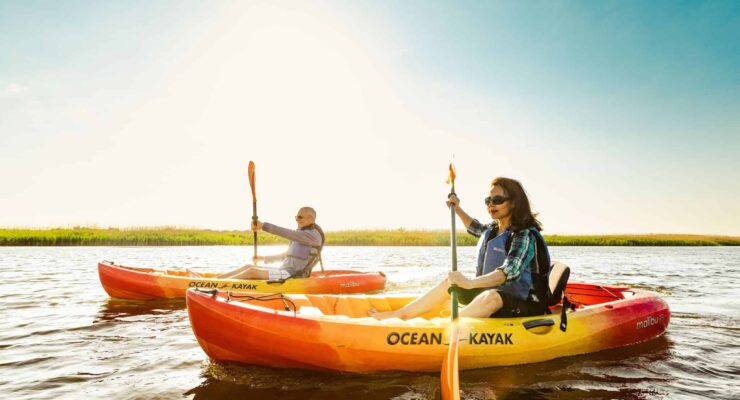
Kayaking and Paddling at Back Bay
Back Bay National Wildlife Refuge, on the southern end of Virginia Beach, is one of the better-kept secrets in the area. The refuge has a dedicated kayak and canoe launch at Horn Point, open seasonally, that puts you directly into a stretch of freshwater marsh most tourists never see. It’s a slower, quieter kind of outing than the oceanfront, with a real chance of spotting herons, ospreys, or migrating waterfowl depending on the season.
If you don’t have your own kayak, several outfitters in the area rent gear by the half day, and the refuge staff can point you toward launch times and seasonal water conditions before you head out.
Surf Fishing and Sight Fishing Along the Coast
Surf fishing is one of the more accessible outdoor activities in Virginia Beach, requiring nothing more than a rod, some bait, and a stretch of open beach. Back Bay’s oceanfront side allows surf fishing in designated areas, and the same barrier island stretch that runs down toward Sandbridge is a popular, less crowded alternative to fishing directly off the boardwalk.
Early morning and early evening tend to be the most productive windows, both for the fish and for avoiding the midday sun, which brings us to the next point.
Protecting Your Eyes on the Water
Sun glare off open water is a different challenge than glare on land, since it comes from below as well as above. The American Academy of Ophthalmology recommends sunglasses that block 100 percent of UV-A and UV-B rays for exactly this kind of exposure, and polarized lenses in particular cut down on the water glare that makes it hard to see beneath the surface, whether you’re watching for fish or just trying to keep your footing on a kayak.
A hat with a real brim helps too, but on a boat or a kayak, sunglasses that won’t slide off with a wave or a gust of wind matter more than most people expect until they’ve lost a pair overboard.
Checking Ocean Conditions Before You Go
Back Bay and Sandbridge both sit on open Atlantic coastline, and rip currents can form even on days that look calm from the shore. It’s worth checking the National Weather Service’s rip current guidance for the coastal Virginia area before any swimming or surf fishing, and keeping an eye on posted flag warnings if you’re near a lifeguard-monitored stretch of beach.
Extending the Trip to False Cape State Park
If a half day at Back Bay isn’t enough, False Cape State Park sits just beyond the refuge and is only reachable by foot, bike, kayak, or a seasonal tram that runs through Back Bay itself. It’s one of the few truly undeveloped stretches of coastline left in the area, with no roads and no buildings, just beach, dunes, and maritime forest.
The tram tours run seasonally and fill up, so it’s worth planning that leg of the trip in advance rather than showing up and hoping for space. For anyone kayaking from Horn Point, paddling down and back is also an option for a more self-guided version of the same trip.
Gear That Keeps Up With the Action
Anyone who’s tried to fish, paddle, or wade with a phone in one hand knows the problem: there’s rarely a good place to put it, and salt water is not forgiving to electronics. This is part of why Oakley’s Meta sunglasses have found a following among anglers and paddlers. They combine genuine polarized, UV-blocking lenses with a built-in camera and open-ear audio, so capturing a catch or a good wildlife sighting doesn’t require digging a phone out of a dry bag mid-cast.
For a day that mixes kayaking, fishing, and a fair amount of walking between spots, that’s one less thing to manage and one less thing to worry about dropping in the water.
Conclusion
Virginia Beach’s oceanfront and boardwalk will always be the main draw, but the quieter side of the city, Back Bay’s marshes, the surf fishing spots along the barrier islands, and the wildlife that comes with both, is worth building a day around. Bring real eye protection, check the water conditions before you go, and pick gear that can keep up with a day spent mostly outdoors and mostly near the water.



 Events


